by Granny Flat Builder | Jun 24, 2026 | Granny Flats
With careful and correct planning you can turn an unwanted pool space into the perfect place for a Granny Flat
Pools undoubtedly offer a refreshing escape during scorching summers, becoming a hub of relaxation and fun. However, their allure comes with responsibilities. Pool maintenance can be demanding, involving regular cleaning, chemical treatments, and equipment upkeep. Moreover, even well-maintained pools have a limited lifespan due to wear and tear. If you find that you’re no longer making the most of your pool and the upkeep has become burdensome, repurposing the pool area by having it professionally filled in could open up exciting possibilities. The land once occupied by the pool can be transformed into a valuable space for a secondary dwelling, like a Granny Flat. This approach maximises your property’s potential, creating new living space while sidestepping the ongoing costs and maintenance of an underutilised or aging pool.
The importance of correct pool site removal for a Granny Flat
The idea of constructing a granny flat over a swimming pool site might seem intriguing, but it’s not as simple as placing a new structure over the existing pool. The first and most crucial step is the complete removal of the swimming pool itself. Whether your pool is made of concrete or fiberglass, it’s imperative to clear the area of any remnants of the old pool. Why is this step so vital?
Foundations are the backbone of any building, and they must be built on stable ground to ensure the structural integrity of the entire construction. When you’re building a granny flat over a former pool area, the ground needs to be prepared thoroughly. If there are any remnants of the old pool, such as concrete debris or discarded building materials, these can cause instability in the ground, leading to potential issues with your new building’s foundation.
Introducing VENM: Virgin Excavated Natural Material
Imagine starting the construction process and realising that your foundation is compromised due to hidden debris from an old pool. Not only would this be a major setback, but it could also lead to significant delays and expenses. Bits of concrete, rusty rebar, and other building materials can cause havoc beneath the surface. Additionally, the presence of asbestos, a hazardous material commonly used in older construction, can pose health risks if disturbed during construction. To avoid these issues, a thorough and professional removal of all debris is paramount.
The process of building over a former swimming pool site involves more than just clearing the area. It requires proper preparation of the ground to ensure stability and safety. After removing all debris, the space needs to be filled with suitable material known as Virgin Excavated Natural Material (VENM). This term holds great significance and is recognised by environmental authorities across different states.
VENM definition:
VENM is defined as virgin excavated natural material (e.g. clay, gravel, sand, soil and rock) that is not mixed with any other waste and that:
(a) has been excavated from areas that are not contaminated2, as a result of industrial, commercial, mining or agricultural activities, with manufactured chemicals, that does not contain sulphidic ores or soils and does not contain naturally elevated levels of certain elements or compounds, or
(b) consists of excavated natural materials that meet such criteria as may be approved by the Environment Protection Authority (EPA) 3.
The following is not classified as VENM:
- excavated material which has been stockpiled, reused or processed in any way or has been sourced from a site where contamination is present or has been previously identified.
- fill material, engineered or manufactured topsoil, material which has been impacted by anthropogenic inclusions (for example asphalt, road base and building rubble) or vegetation waste.
Do you need a complying development certificate (CDC) or development application (DA) to fill in a pool?
A pool is not just a recreational feature; it’s also a legislated construct that requires careful adherence to regulations. Whether you’re planning to build or remove a swimming pool, obtaining the necessary permissions and approvals from the local council is essential. Furthermore, regardless of whether the pool is filled with water or not, it must be surrounded by a compliant fence until it is filled. Failing to maintain an appropriate pool enclosure can result in fines or, even worse, an accident, so definitely leave the fence.
If you are filling in the pool well before you start your construction venture, you might obtain a CDC. Getting a CDC for filling in a pool is quite easy to do, simply search local certifiers who do this, they will make the required lodgement with council to notify them. Your chosen contractor for filling in the pool will also need to see a copy of the CDC before they can start the works. Costs may vary between contractors but should be in the ballpark of $500.
If your pool is still in place when you have your initial consultation with Aplus, we will do all the council work for you. That is, when lodging a DA for your new structure, we would include the removal of the pool in the DA.
Know what services are connected, and safely have disconnected
Is your pool connected to electricity – for example your pool pump, or solar? or is there gas or any other services nearby or connected to the area that will require demolition? Consider the existing services to the pool such as power and gas that may be within the building foot print, and have these safely mapped and disconnected by a qualified expert.
Pool filled in and compacted for stability
Just filling the pool area with VENM isn’t sufficient. The material also needs to be properly compacted. Compaction ensures that the ground is stable and won’t shift or settle under the weight of the new Granny Flat. A stable foundation is the key to preventing future problems such as structural damage, cracks, and uneven settling.
Once the process of repurposing a pool area for a new structure begins, it’s important to anticipate a potential timeline of up to two weeks or more. Keep in mind that work cannot proceed on wet ground to ensure a solid foundation. In the case of a fiberglass pool, the procedure involves stripping the pool bottom first to preserve the shape of the pool, the filling process commences at one end, typically from the bottom, while carefully compacting the fill material as it’s added. The attention to detail during this process is vital to create a solid foundation for the forthcoming Dwelling.
Provide all the detail you can to your builder
When you’re considering building a Granny Flat over a swimming pool site, it’s crucial to communicate this plan (or that the site formerly had a pool on it) from the very beginning of your building process. Why? Because proper soil testing must be conducted to determine the suitability of the ground for construction. Soil testing evaluates factors such as soil composition, density, and load-bearing capacity.
In all cases, an Engineer will also ask us to extend our footings past the existing base of the pool. Our foundations will be designed by an engineer to account for the changes and disturbances in the ground. All information you can give helps engineers and builders conduct the appropriate testing and design the appropriate foundation for your Granny Flat.
More Expert Building content from the Aplus Construction team:
- What is a raft slab?
- When are retaining walls required?
- What are screw piers?
Aplus are committed to making your building project stress free and simple. You can be assured that we will be aiming to complete your project with the best outcome for your long term use of the home. Building a home is a journey we are privileged to go on with our clients, and Aplus are committed to being completely transparent and delivering the highest standards of communication along the way.
We work with expert engineers who help us deliver your building plans to the most up to date local council regulations. At every step of the way we are working with the engineers guidelines to validate expected building conditions. When there are surprises, (which there mostly aren’t) you can be assured that your building supervisor has the expert knowledge to guide the decisions you make next – and the team to back it up.
by Granny Flat Builder | Jun 24, 2026 | Granny Flats
Caring for family members, whether they are elderly or have disabilities, can be emotionally and physically draining. Your own physical space away from family can provide a respite from these responsibilities, allowing caregivers to focus on their own needs and well-being.
A parent with an adult child who has a disability faces a difficult decision between wanting to support their child’s independence and ensuring their safety and well-being. Of course as a parent you do not want the adult child to be too far from home, but also recognise the importance of allowing them to live a fulfilling life.
Having ones own physical space is essential for maintaining good mental health. Caring for any family member with disabilities can be a full-time job, and it can take a significant toll on a parent’s mental health. Adults need more privacy and independence, and having separate living spaces can allow them to have that while still being close. This can help them maintain a sense of autonomy and control over their own lives, which is important for their mental well-being.
With the cost of long term care objectionable to many families, existing homes can be adapted to accommodate the family situation. A Granny Flat can allow families to find a balance between being supportive parents and allowing children to live life on their own terms. Parents are able to work hard in the background to create accessible spaces that accommodate individual needs, and the end result is less worry about the childs’ safety and wellbeing.”
Having enough space can also help the parent maintain their own sense of identity and independence. It can be easy to lose oneself in the role of a full-time caregiver, but having space to pursue hobbies, interests, and other activities outside of caregiving can help maintain a sense of self. This, in turn, can help prevent burnout and promote better mental health for the parent.
In addition to providing space for separate living areas and individual pursuits, having enough space can also help reduce stress levels for both the parent and the adult child with disabilities. When living in close quarters, it can be easy for tensions to run high and for minor annoyances to become major sources of stress. Having enough space can help reduce these tensions and allow for a more peaceful living environment.
A granny flat can be designed to be accessible and accommodating to the needs of its occupant, including a wide array of specifications that are personal to them
Finally, having enough space can provide opportunities for socialisation and community involvement. For the adult child with disabilities, having space for friends and visitors can help them build and maintain social connections. For the parent, having enough space to host events or gatherings can provide opportunities for socialization and community involvement, which can be beneficial for mental health.
Overall, space away from family can be beneficial for mental health in many ways. It can provide opportunities for personal growth and development, promote independence and control, reduce stress and tension in relationships, and provide a break from caregiving responsibilities. While family is important, it’s also important to recognize the value of space and independence for maintaining good mental health.
by Granny Flat Builder | Jun 24, 2026 | Granny Flats
Popular all year round, some 1.5 million visitors are looking for accommodation in the NSW Hunter Valley, and your Cessnock AirBnB accommodation is an obvious full or part-time investment opportunity.
Renowned as a paradise for wine enthusiasts, the Hunter Valley boasts an impressive collection of over 150 wineries and cellar doors. Visitors can immerse themselves in wine tastings, vineyard tours, and indulge in culinary delights during food and wine festivals. The region also offers an array of outdoor activities, including hot air ballooning, horseback riding, and scenic walks through the breathtaking countryside. Throughout the year, the Hunter Valley hosts a vibrant calendar of events such as concerts, cultural festivals, and thrilling sporting competitions, ensuring an exciting and diverse range of experiences for tourists and locals alike.
Cessnock Airbnb: Gateway to the Hunter Valley
Situated in close proximity to the Hunter Valley, Cessnock serves as the perfect gateway town for exploring the region’s treasures. It’s convenient location allows visitors easy access to renowned wineries, exceptional restaurants, and popular attractions, while providing a charming atmosphere of its own. As the largest town in the area, Cessnock offers a wide range of amenities, including shopping centers, quaint cafes, and entertainment venues, ensuring a comfortable and enjoyable stay for visitors seeking the best of both worlds.
As the demand for accommodation in the Hunter Valley continues to rise, Cessnock property owners can tap into this lucrative market by offering comfortable and well-appointed accommodations. With favourable council planning for secondary dwellings and plenty of land space, a simple, affordable Granny Flat build offers a lucrative investment opportunity.
What sort of AirBnB should you build in Cessnock?
The key to success in the Cessnock accommodation market lies in providing exceptional amenities and services. Property owners should strive to offer comfortable and well-appointed accommodations, equipped with modern facilities and thoughtful touches.
For long-term Cessnock Airbnb income, it is crucial for property owners to begin with a quality build of their Granny Flats. Starting with a well-constructed and aesthetically pleasing secondary dwelling lays the foundation for exceptional amenities and services. By ensuring a high standard of craftsmanship, property owners can offer guests a comfortable and enjoyable stay from the moment they step foot into the Granny Flat. A quality build not only enhances the guest experience but also establishes a solid reputation for the property, fostering positive reviews and repeat bookings. Investing in the construction of a Granny Flat with careful consideration of materials, layout, and functionality sets the stage for delivering exceptional accommodations that exceed guest expectations and contribute to long-term success in the Cessnock accommodation market.
Building a Granny Flat Airbnb in Cessnock: Key things to know
- Building a granny flat in Cessnock offers a lucrative opportunity to tap into the thriving short term accommodation market in the Hunter Valley.
- Events all year round mean a potential all year round investment strategy
- Cessnock’s zoning regulations allow for the development of secondary dwellings, making the process more accessible for property owners.
- You can build a property of up to 60m2 under these favourable regulations
- Aplus’s 60m2 designs include 1 bedroom Granny Flats, 2 bedroom Granny Flats and 3 bedroom Granny Flats
- Careful consideration of design, materials, and functionality is crucial for a successful granny flat build in Cessnock.
- Investing in a quality build sets the stage for positive guest reviews, repeat bookings, and long-term success in the Cessnock accommodation market.
- Consult with local experts who have experience in the region and can guide you through the process of building a granny flat in Cessnock.
- Request a site visit to assess the feasibility of your property for granny flat construction.
by Granny Flat Builder | Jun 24, 2026 | Completed Granny Flats, Custom Granny Flats, Granny Flats, Lake Macquarie
Set in the rising-growth suburb of Woodrising, this 48m² custom granny flat is a standout for its careful planning, BAL 29 compliance, and thoughtful multigenerational purpose.
Designed to allow a daughter to support her elderly mother on-site—while maintaining privacy and independence—the project was completed in 2024 under Lake Macquarie Council approval. It’s a true example of how we help homeowners navigate challenging sites and complex requirements, all while keeping the process respectful and collaborative.
Why Woodrising Is a Smart Spot for a Granny Flat
Woodrising, in Lake Macquarie’s western corridor, continues to attract attention for its large blocks, strong local infrastructure, and proximity to Newcastle. For families already living in the area, adding a secondary dwelling is a strategic way to future-proof their lifestyle—whether it’s for elderly parents, teenagers, or live-in carers.
This block was no exception, but the access and bushfire zoning meant careful planning was key.
Custom Design with Standard Inclusions
The home itself is a custom 1-bedroom layout with a compact footprint and a practical floorplan:
48m² internal area with an additional covered porch for weather-protected entry
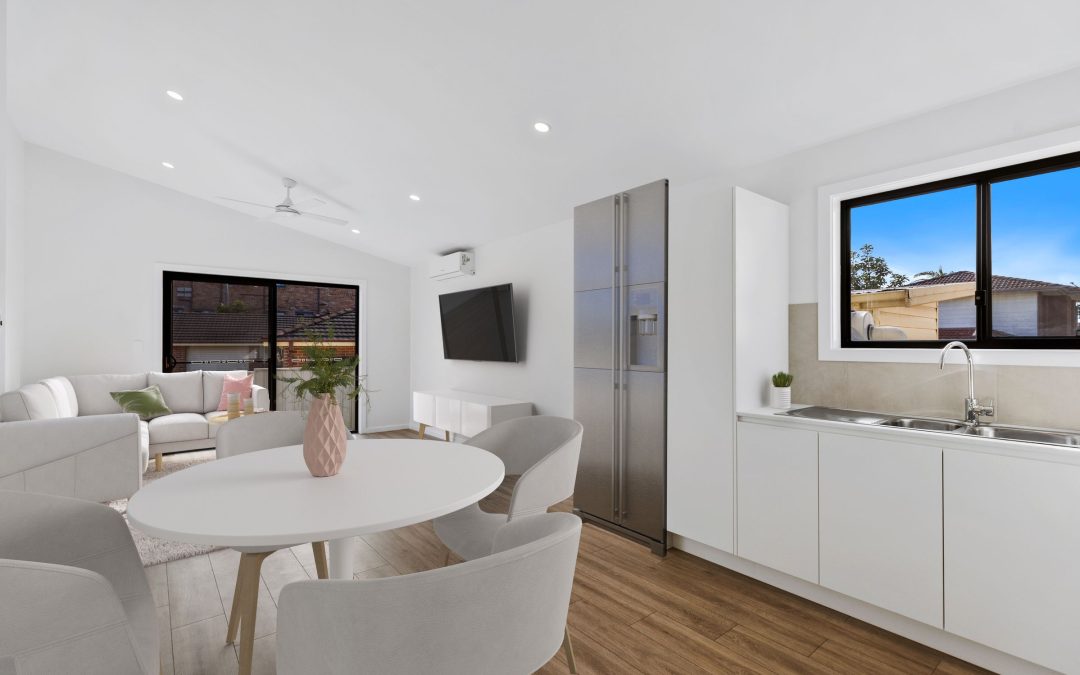
Open-plan kitchen, dining, and living with plenty of natural light
Dedicated laundry and full bathroom
Built on a slab-on-ground using a steel frame and truss system for long-term durability
Despite the bespoke layout, the owner selected standard inclusions throughout, proving that smart design doesn’t need expensive upgrades to feel complete.
Built to BAL 29 Standards and Energy Commitments
With a Bushfire Attack Level (BAL) of 29, construction was adapted to suit both environmental requirements and the owner’s peace of mind. Features include:
Toughened glazing to windows and sliding doors
Aluminium mesh flyscreens for ember protection
Eave and roof penetration protections
Non-combustible cladding, sarking and insulation materials
Sealed LED lighting and energy-efficient air conditioning systems
Rainwater tank connected to toilet and laundry, helping meet BASIX water commitments
R4.0 insulation to ceiling and R2.5 insulation to walls for improved year-round comfort
Together, these features ensured compliance with both bushfire and energy efficiency codes—without compromise to functionality or form.
A Difficult Site, Carefully Managed
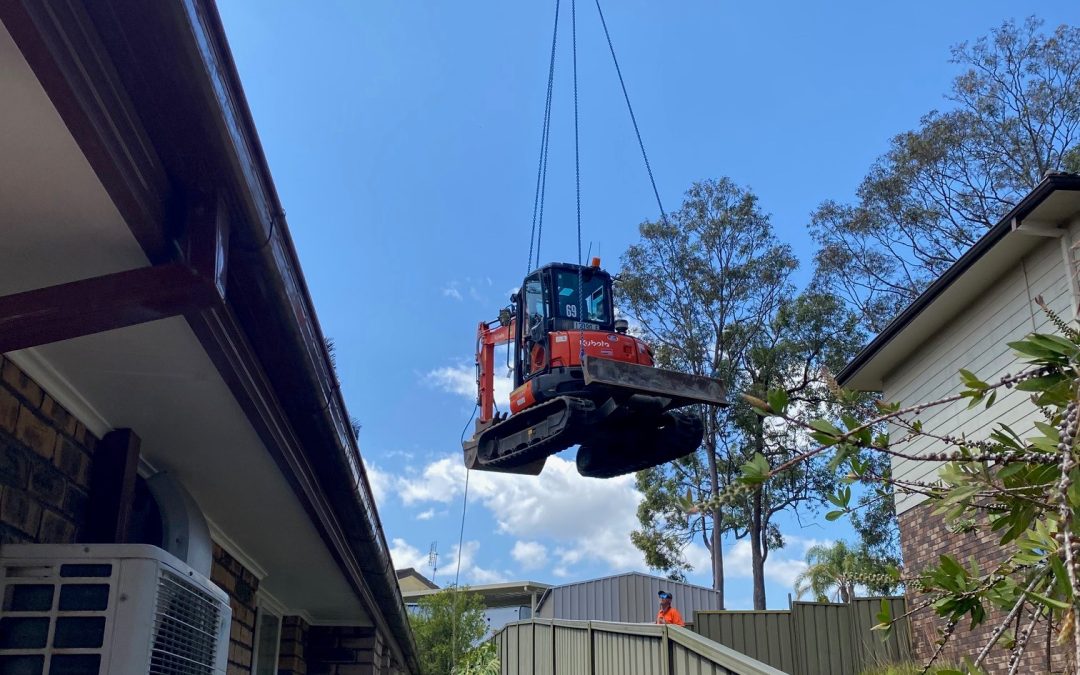
This build came with one major obstacle: limited access to the rear yard. In fact, access was so restricted that an excavator had to be craned into position just to begin site works.
With tight logistics, bushfire zoning, and the homeowner living on-site throughout construction, careful coordination was essential. Having a client with previous owner-builder experience proved to be a real advantage—she understood the process, asked smart questions, and collaborated with the team to keep things moving smoothly.
Woodrising Lake Macquarie Granny Flat
Multigenerational Living That Works
Building for an aging parent means more than just adding a room—it requires privacy, access, and comfort. This project delivered on all three, offering a space where family can remain close without sacrificing independence.
Whether it’s caring for loved ones or future-proofing your lifestyle, a granny flat like this is more than just a structure—it’s a living solution.
Have a tricky block or unique living need? Let’s talk.
Aplus helps families across NSW and the ACT build secondary dwellings that are functional, future-ready, and built to last—even when site access, bushfire zones, or council rules seem overwhelming.
Book a free site inspection today to find out what’s possible for your block—custom designs, standard inclusions, real results.
by Granny Flat Builder | Jun 24, 2026 | Granny Flats, Guides
Building under Cessnock Council Granny Flat Regulations? Here’s What You Need to Know
From Aberdare to Bellbird, Kurri Kurri to Kitchener, more Hunter Valley homeowners are turning to granny flats as a smart way to add space, value, and independence to their blocks. If you’re considering a granny flat in the Cessnock local government area (LGA), here’s what you need to know about what’s allowed, how approvals work, and whether you may be eligible to build something larger than the standard 60m².
What Is a Granny Flat (or Secondary Dwelling)?
In Cessnock and across NSW, a granny flat is officially known as a secondary dwelling. It’s a self-contained home on the same lot as an existing dwelling, and can be either detached, attached, or within the main home.
Granny flats must:
Be located on a property with an existing dwelling house
Use the same lot and title (not subdivided)
Have their own kitchen, bathroom, and living/sleeping area
Share utility connections with the main house
How Big Can a Granny Flat Be in Cessnock?
In most residential zones across NSW, the maximum size for a secondary dwelling is 60m², as specified under the NSW Housing SEPP.
However, in rural zones within Cessnock LGA, it may be possible to build larger than 60m², subject to certain conditions.
Can I Build Larger Than 60m² in Cessnock?
Yes — under the NSW Regional Housing Code, secondary dwellings larger than 60m² can be approved as Complying Development (CDC) on certain rural-zoned properties. Review this case study in Quorrobolong.
According to Cessnock City Council and the NSW Planning Portal, this applies to lots zoned:
To qualify:
Your lot must meet the minimum lot size in the Cessnock LEP
The secondary dwelling must be clearly secondary to the main home
Adequate access to water and sewer must be demonstrated (onsite systems may be required in unsewered areas)
All setbacks, bushfire, and flooding requirements must be met
Because many properties in the Cessnock region are semi-rural or rural residential, this pathway is more common than you might expect.
You can find full zoning and lot size details in the Cessnock Local Environmental Plan (LEP) or check your property zoning via the NSW Planning Portal.
Do I Need Council Approval for a Granny Flat?
There are two main approval pathways in the Cessnock LGA:
1. Complying Development Certificate (CDC)
A CDC is a fast-tracked approval issued by a private certifier, typically granted within 20 days. You may be eligible if your site complies with all planning and building controls under the NSW Housing SEPP or Regional Housing Code (for rural zones).
2. Development Application (DA)
If your site doesn’t qualify for CDC (e.g. due to bushfire risk, flood zones, sewer issues, or variations from planning controls), you can apply for a DA via Cessnock City Council. This process takes longer and requires a more detailed submission, but may provide more flexibility. Aplus take care of this for you.
More information on both pathways is available on the Cessnock Council Development Application page.
Sewer and Onsite Wastewater Considerations
Not all properties in the Cessnock LGA are connected to town sewer. For unsewered sites, you’ll need to provide an Onsite Sewage Management System (OSMS) that meets Council and NSW Health guidelines.
Aplus can help organise:
More information on OSMS requirements is available on the Council’s Onsite Sewage Systems page.
Why Choose Aplus for Your Cessnock Granny Flat?
We’re not just a granny flat builder – we’re local experts in Hunter Valley development. With a display granny flat in Cessnock, we offer:
Free site assessments
Help with zoning checks and eligibility
In-house design, drafting, and approvals
Fast, high-quality construction
Whether you’re in Aberdare or Ellalong, Maitland or Metford, our team understands the Cessnock landscape – and what it takes to get a compliant granny flat built on your block.
Visit Our Cessnock Display
Want to see the quality of our builds in person? Visit our fully built 2-bedroom, 60m² display granny flat in Cessnock:
📍 Address: 4a Melton Avenue, Cessnock NSW
📞 Book an inspection
Ready to Explore Your Options?
If you’re thinking about building a granny flat in the Cessnock area, we’re here to help. From zoning advice to approval pathways and construction, our local team can give you straight answers and clear next steps.
📅 Book a free site consultation today or call our Hunter Valley team to find out what’s possible on your property.
by Granny Flat Builder | Jun 24, 2026 | Granny Flats
With interest rates in Australia easing, now is a great time to look at building a granny flat — not just for the extra living space, but for the investment potential. Let’s walk through some example numbers so you can see exactly how much it could cost (and save) you each month. Aplus are starting new build Granny Flats with smart investors every week. Have a look at this custom Granny Flat in San Remo earning 24k per year, this CDC Granny Flat in Newcastle making $27k per year, or this one in Metford generating $26k per year.
The Example Build
Aplus Granny Flats prices start at around $200k in New South Wales and $220k in the ACT. We’ve used a sensible illustration of $250k for our worked example – but its highly possible for you to outlay an even lower initial capital cost. We can do a ballpark quote for you anytime here.
- Build cost: $250,000
- Deposit: 20% ($50,000)
- Borrowed amount: 80% ($200,000) via equity from your existing home
- Interest rate: 3.99% p.a. (variable, interest-only for illustration)
Monthly Repayments at 3.99%
For a $200,000 interest-only loan at 3.99%:
Annual interest = $200,000 × 0.0399 = $7,980
Monthly interest = $7,980 ÷ 12 ≈ $665
Potential Rental Income
As evidenced by our examples in the introduction, a well-built, 2-bedroom granny flat in NSW or the ACT can often rent for $400–$550/week, depending on location and features.
Let’s work on the lower end:
$400/week × 52 weeks = $20,800 per year
That’s about $1,733 per month in gross income.
Before-Tax Cashflow
- Income: $1,733/month
- Interest cost: $665/month
- Positive cashflow before tax: ~$1,068/month
The Tax Advantage – Depreciation
If your granny flat is built as a rental property, the Australian Tax Office (ATO) allows you to claim depreciation on the structure and fittings.
Capital works deduction: $250,000 × 0.025 = $6,250/year
Plant and equipment deduction: Sometimes another $2,000–$4,000/year early on
To maximise your tax deductions, it’s important to have a licensed quantity surveyor prepare your depreciation schedule. The Australian Tax Office requires a professionally prepared report to substantiate your claims, and a qualified surveyor can ensure nothing is missed — from capital works to plant and equipment items. Aplus works with trusted, accredited surveyors and can put you in touch with the right professionals to get your schedule completed quickly and accurately. A report will cost you around $600 – another tax deduction perhaps – but is well worth the annual deduction you can get.
What That Means at Tax Time
If your rental income is $18,200 and your interest cost is $7,980:
Operating profit before tax: $10,220/year
Now subtract depreciation:
Lets estimate $7,000 depreciation = $4,220 taxable profit
If you’re on a 32.5% marginal tax rate, tax payable = ~$1,371.50.
That’s much lower than without depreciation — and in some scenarios (with maintenance and other deductible expenses) you could actually report a loss for tax purposes while still being cashflow positive.
Why the Lower Interest Rate Matters
At the previous rate of 5.5%, the same $200,000 loan would cost:
$200,000 × 0.055 = $11,000/year interest = $917/month.
That’s $252 more per month compared to 3.99%. Over a year, that’s $3,024 saved — enough to cover several months of insurance, maintenance, or even part of your rates.
The Bottom Line
With today’s interest rates, a well-located granny flat can:
- Cover its own loan repayments
- Generate extra cashflow
- Deliver significant tax deductions through depreciation schedules
If you’ve been thinking about building, the numbers are looking better than they have in years.
This is not specific financial advise and is provided for illustration purposes only. You should always consult your tax and financial advisors before making a big decision