Granny Flats: CDC vs DA – the Pros and Cons of Each

Granny Flats: CDC vs DA – the Pros and Cons of Each

CDC vs DA: What’s the Difference When Building a Granny Flat?

If you’re thinking about building a granny flat, there’s a lot to get excited about—from extra space and rental income to adding value to your property. But before you can start building, you’ll need the right approvals in place.

Understanding the difference between a Complying Development Certificate (CDC) and a Development Application (DA) is a key step in the planning process. Here’s a quick guide to help you choose the right path forward.


What is a CDC?

A Complying Development Certificate (CDC) is a fast-tracked approval process that combines both planning and construction approval. It’s designed for straightforward projects that meet specific criteria set by the NSW government.

If your site and proposed granny flat meet these requirements, a CDC is usually the quickest and simplest option. Best of all, it can be handled by a private certifier—meaning you don’t need to go through council.


What is a DA?

A Development Application (DA) is a more traditional approval process managed by your local council. It involves a formal assessment of your plans against council guidelines, including things like setbacks, streetscape, and environmental impact.

Even if your proposed design doesn’t meet all guidelines, councils may still grant approval if the overall proposal is considered reasonable—offering more flexibility than a CDC in some cases.


How Much Does a CDC or DA Cost?

CDC costs:
The cost of a CDC varies based on the complexity of your build and the certifier’s fees. On average, you can expect to pay around $2,500 to $3,500 for the application.

DA costs:
Development Application costs can vary widely, typically ranging from $2,000 to $9,000, depending on council fees, consultant reports, and any required adjustments to your plans.

Keep in mind that both paths will also require a Construction Certificate before work begins, which carries its own fees.


How Long Does the Approval Process Take?

CDC timeline:
If your block is straightforward and all required documents (like surveys and drawings) are ready, approval can be obtained in as little as 4 to 8 weeks.

DA timeline:
A DA takes significantly longer—usually 4 to 6 months, depending on your council’s workload. It can take even longer if there are objections or requests for amendments.


Pros and Cons of a CDC

Pros:

  • Faster and simpler than a DA

  • Can be approved by a private certifier

  • Suitable for straightforward sites

  • Can sometimes be lodged before land registration

Cons:

  • Strict requirements with little flexibility

  • No room for interpretation—non-compliant designs won’t be approved


Pros and Cons of a DA

Pros:

  • Councils may approve designs that fall outside CDC guidelines

  • Greater design flexibility in some areas

Cons:

  • Slower processing time (up to six months or more)

  • More complex and often requires more documentation

  • Council response times can vary significantly


So, Which Option is Right for You?

If your site meets the CDC requirements, that’s usually the best path—faster, simpler, and often cheaper. But if your land isn’t eligible for a CDC, don’t be discouraged. A DA might take longer, but it can still get you to the finish line.

At Aplus Granny Flats, we work with both approval pathways and guide you through the process from start to finish. Whether it’s a quick CDC or a more complex DA, our experienced team knows how to navigate the regulations—and get your granny flat built.

Thinking of building a granny flat? Get in touch today and let’s talk about what’s possible on your property

Eco-Tourism Accommodations in NSW: A Blueprint for Sustainability

Eco-Tourism Accommodations in NSW: A Blueprint for Sustainability

The tide is turning towards sustainable tourism, and New South Wales (NSW) is leading the charge with its support for ecotourism projects. This burgeoning trend reflects the evolving preferences of travellers who seek not only relaxation and adventure but also opportunities to engage with nature while leaving a positive impact on the environment and local communities. As the NSW Government throws its weight behind ecotourism initiatives, accommodations have a pivotal role to play in fostering sustainable experiences that resonate with today’s conscientious travellers.

Understanding Eco Tourism Accommodation

At the heart of sustainable tourism lies ecotourism accommodations, which prioritize environmental conservation, minimize ecological footprints, and immerse guests in the beauty of nature. From secluded eco-lodges nestled in pristine wilderness to sustainable resorts perched along coastal vistas, these accommodations embody a commitment to sustainability that goes beyond mere rhetoric. They serve as havens where guests can unwind, reconnect with nature, and contribute to conservation efforts—all while treading lightly on the Earth.

For accommodations in NSW seeking to embrace ecotourism and sustainability, there are actionable steps and best practices to heed. Drawing inspiration from the NSW Government’s support and initiatives, here’s a roadmap for creating eco-friendly accommodations that resonate with travellers:


1. Embrace Sustainable Design and Operations:

  • From inception to operation, prioritize eco-friendly design elements such as passive cooling, renewable energy sources, and sustainable building materials.
  • Implement water-saving measures such as rainwater harvesting, low-flow fixtures, and greywater recycling systems.
  • Opt for energy-efficient appliances, LED lighting, and smart climate control systems to minimize energy consumption.

2. Foster Environmental Stewardship:

  • Develop and adhere to comprehensive environmental management systems (EMS) to monitor, mitigate, and continually improve environmental performance.
  • Engage guests in sustainability initiatives through educational programs, nature walks, and hands-on conservation activities.
  • Establish partnerships with local environmental organizations, land trusts, and indigenous communities to support conservation efforts and promote biodiversity.

3. Enhance Guest Experiences with Eco-Conscious Amenities:

  • Provide guests with eco-friendly amenities such as biodegradable toiletries, reusable water bottles, and organic bedding.
  • Curate immersive experiences that highlight the natural wonders and cultural heritage of the surrounding area, while promoting responsible tourism practices.
  • Offer sustainable transportation options, such as electric vehicle charging stations and bicycles, to encourage eco-friendly exploration.

4. Celebrate Sustainability and Community Engagement:

  • Showcase your commitment to sustainability through transparent communication channels, eco-certifications, and partnerships with eco-conscious organizations.
  • Engage with local communities and indigenous peoples to foster cultural exchange, support local artisans, and promote sustainable livelihoods.
  • Encourage guests to participate in conservation initiatives, tree planting programs, and community-led projects aimed at preserving natural habitats and cultural heritage sites.

In essence, eco-tourism accommodations in NSW represent more than just places to stay—they embody a philosophy of sustainability, stewardship, and mindful living. By embracing eco-friendly practices, accommodations not only attract environmentally conscious travellers but also serve as catalysts for positive change in the tourism industry. As travellers seek meaningful connections with nature and authentic experiences, eco-tourism accommodations stand poised to deliver immersive journeys that leave indelible memories while safeguarding the planet for future generations.


Partnering with Aplus for Planning, Design, and DA Work

Once you’ve explored the possibilities and gathered essential information, engaging a professional team can significantly simplify the planning, design, and DA processes.

Aplus, with its wealth of experience, can collaborate with you to bring your vision to life. From concept plans to the final DA submission, our expertise can navigate the intricacies of eco-tourism accommodation, turning your dream accommodation business into a reality.

Building your accommodation business requires careful planning, adherence to zoning regulations, and effective communication with the local Council. By conducting thorough research, initiating early conversations, and collaborating with experienced professionals like Aplus, you can transform your dream into a flourishing business venture. The tranquillity of rural NSW awaits, and with the right approach, your accommodation business can become a welcoming haven for travellers seeking a taste of the countryside.


Can I fill in a swimming pool and build a Granny Flat?

Can I fill in a swimming pool and build a Granny Flat?

With careful and correct planning you can turn an unwanted pool space into the perfect place for a Granny Flat

Pools undoubtedly offer a refreshing escape during scorching summers, becoming a hub of relaxation and fun. However, their allure comes with responsibilities. Pool maintenance can be demanding, involving regular cleaning, chemical treatments, and equipment upkeep. Moreover, even well-maintained pools have a limited lifespan due to wear and tear. If you find that you’re no longer making the most of your pool and the upkeep has become burdensome, repurposing the pool area by having it professionally filled in could open up exciting possibilities. The land once occupied by the pool can be transformed into a valuable space for a secondary dwelling, like a Granny Flat. This approach maximises your property’s potential, creating new living space while sidestepping the ongoing costs and maintenance of an underutilised or aging pool.

The importance of correct pool site removal for a Granny Flat

The idea of constructing a granny flat over a swimming pool site might seem intriguing, but it’s not as simple as placing a new structure over the existing pool. The first and most crucial step is the complete removal of the swimming pool itself. Whether your pool is made of concrete or fiberglass, it’s imperative to clear the area of any remnants of the old pool. Why is this step so vital?

Foundations are the backbone of any building, and they must be built on stable ground to ensure the structural integrity of the entire construction. When you’re building a granny flat over a former pool area, the ground needs to be prepared thoroughly. If there are any remnants of the old pool, such as concrete debris or discarded building materials, these can cause instability in the ground, leading to potential issues with your new building’s foundation.

Introducing VENM: Virgin Excavated Natural Material

Imagine starting the construction process and realising that your foundation is compromised due to hidden debris from an old pool. Not only would this be a major setback, but it could also lead to significant delays and expenses. Bits of concrete, rusty rebar, and other building materials can cause havoc beneath the surface. Additionally, the presence of asbestos, a hazardous material commonly used in older construction, can pose health risks if disturbed during construction. To avoid these issues, a thorough and professional removal of all debris is paramount.

The process of building over a former swimming pool site involves more than just clearing the area. It requires proper preparation of the ground to ensure stability and safety. After removing all debris, the space needs to be filled with suitable material known as Virgin Excavated Natural Material (VENM). This term holds great significance and is recognised by environmental authorities across different states.

VENM definition:

VENM is defined as virgin excavated natural material (e.g. clay, gravel, sand, soil and rock) that is not mixed with any other waste and that: 

(a) has been excavated from areas that are not contaminated2, as a result of industrial, commercial, mining or agricultural activities, with manufactured chemicals, that does not contain sulphidic ores or soils and does not contain naturally elevated levels of certain elements or compounds, or

(b) consists of excavated natural materials that meet such criteria as may be approved by the Environment Protection Authority (EPA) 3.

The following is not classified as VENM:

  • excavated material which has been stockpiled, reused or processed in any way or has been sourced from a site where contamination is present or has been previously identified.
  • fill material, engineered or manufactured topsoil, material which has been impacted by anthropogenic inclusions (for example asphalt, road base and building rubble) or vegetation waste.

Do you need a complying development certificate (CDC) or development application (DA) to fill in a pool?

A pool is not just a recreational feature; it’s also a legislated construct that requires careful adherence to regulations. Whether you’re planning to build or remove a swimming pool, obtaining the necessary permissions and approvals from the local council is essential. Furthermore, regardless of whether the pool is filled with water or not, it must be surrounded by a compliant fence until it is filled. Failing to maintain an appropriate pool enclosure can result in fines or, even worse, an accident, so definitely leave the fence.

If you are filling in the pool well before you start your construction venture, you might obtain a CDC. Getting a CDC for filling in a pool is quite easy to do, simply search local certifiers who do this, they will make the required lodgement with council to notify them. Your chosen contractor for filling in the pool will also need to see a copy of the CDC before they can start the works. Costs may vary between contractors but should be in the ballpark of $500.

If your pool is still in place when you have your initial consultation with Aplus, we will do all the council work for you. That is, when lodging a DA for your new structure, we would include the removal of the pool in the DA.

Know what services are connected, and safely have disconnected

Is your pool connected to electricity – for example your pool pump, or solar? or is there gas or any other services nearby or connected to the area that will require demolition? Consider the existing services to the pool such as power and gas that may be within the building foot print, and have these safely mapped and disconnected by a qualified expert.

Pool filled in and compacted for stability

Just filling the pool area with VENM isn’t sufficient. The material also needs to be properly compacted. Compaction ensures that the ground is stable and won’t shift or settle under the weight of the new Granny Flat. A stable foundation is the key to preventing future problems such as structural damage, cracks, and uneven settling.

Once the process of repurposing a pool area for a new structure begins, it’s important to anticipate a potential timeline of up to two weeks or more. Keep in mind that work cannot proceed on wet ground to ensure a solid foundation. In the case of a fiberglass pool, the procedure involves stripping the pool bottom first to preserve the shape of the pool, the filling process commences at one end, typically from the bottom, while carefully compacting the fill material as it’s added. The attention to detail during this process is vital to create a solid foundation for the forthcoming Dwelling.


Provide all the detail you can to your builder

When you’re considering building a Granny Flat over a swimming pool site, it’s crucial to communicate this plan (or that the site formerly had a pool on it) from the very beginning of your building process. Why? Because proper soil testing must be conducted to determine the suitability of the ground for construction. Soil testing evaluates factors such as soil composition, density, and load-bearing capacity.

In all cases, an Engineer will also ask us to extend our footings past the existing base of the pool. Our foundations will be designed by an engineer to account for the changes and disturbances in the ground. All information you can give helps engineers and builders conduct the appropriate testing and design the appropriate foundation for your Granny Flat.

More Expert Building content from the Aplus Construction team:

  • What is a raft slab?
  • When are retaining walls required?
  • What are screw piers?


Aplus are committed to making your building project stress free and simple. You can be assured that we will be aiming to complete your project with the best outcome for your long term use of the home. Building a home is a journey we are privileged to go on with our clients, and Aplus are committed to being completely transparent and delivering the highest standards of communication along the way.

We work with expert engineers who help us deliver your building plans to the most up to date local council regulations. At every step of the way we are working with the engineers guidelines to validate expected building conditions. When there are surprises, (which there mostly aren’t) you can be assured that your building supervisor has the expert knowledge to guide the decisions you make next – and the team to back it up.

Space and independence when choosing to care at home for a loved one

Space and independence when choosing to care at home for a loved one

Caring for family members, whether they are elderly or have disabilities, can be emotionally and physically draining. Your own physical space away from family can provide a respite from these responsibilities, allowing caregivers to focus on their own needs and well-being.

A parent with an adult child who has a disability faces a difficult decision between wanting to support their child’s independence and ensuring their safety and well-being. Of course as a parent you do not want the adult child to be too far from home, but also recognise the importance of allowing them to live a fulfilling life.

Adding A Ramp To Your Granny Flat

Having ones own physical space is essential for maintaining good mental health. Caring for any family member with disabilities can be a full-time job, and it can take a significant toll on a parent’s mental health. Adults need more privacy and independence, and having separate living spaces can allow them to have that while still being close. This can help them maintain a sense of autonomy and control over their own lives, which is important for their mental well-being.

With the cost of long term care objectionable to many families, existing homes can be adapted to accommodate the family situation. A Granny Flat can allow families to find a balance between being supportive parents and allowing children to live life on their own terms. Parents are able to work hard in the background to create accessible spaces that accommodate individual needs, and the end result is less worry about the childs’ safety and wellbeing.”

Having enough space can also help the parent maintain their own sense of identity and independence. It can be easy to lose oneself in the role of a full-time caregiver, but having space to pursue hobbies, interests, and other activities outside of caregiving can help maintain a sense of self. This, in turn, can help prevent burnout and promote better mental health for the parent.

In addition to providing space for separate living areas and individual pursuits, having enough space can also help reduce stress levels for both the parent and the adult child with disabilities. When living in close quarters, it can be easy for tensions to run high and for minor annoyances to become major sources of stress. Having enough space can help reduce these tensions and allow for a more peaceful living environment.


A granny flat can be designed to be accessible and accommodating to the needs of its occupant, including a wide array of specifications that are personal to them

Finally, having enough space can provide opportunities for socialisation and community involvement. For the adult child with disabilities, having space for friends and visitors can help them build and maintain social connections. For the parent, having enough space to host events or gatherings can provide opportunities for socialization and community involvement, which can be beneficial for mental health.

Overall, space away from family can be beneficial for mental health in many ways. It can provide opportunities for personal growth and development, promote independence and control, reduce stress and tension in relationships, and provide a break from caregiving responsibilities. While family is important, it’s also important to recognize the value of space and independence for maintaining good mental health.

Why a 2-Bed 2-Bath Granny Flat Is the Perfect Investment

Why a 2-Bed 2-Bath Granny Flat Is the Perfect Investment

A 2-bed 2-bath granny flat offers the ideal blend of comfort, privacy, and functionality, making it a popular choice for homeowners looking to maximise their property’s potential. Whether you’re after extra space for family, a private retreat for guests, or a high-return rental opportunity, a well-designed 2-bedroom granny flat delivers flexibility and value.

At Aplus Granny Flats, we offer thoughtfully designed 2-bed 2-bath options, including our popular Gemini and the adaptable Banksia 2. Each model is crafted to provide modern, comfortable living with high-quality finishes and smart design features that maximise both space and privacy.


The Gemini – Privacy and Style in a Compact Design

The Gemini is a standout option for homeowners with long and narrow backyards. Priced from $180,000 in NSW, this design is ideal for maximising space while maintaining a sense of privacy and comfort.

Key Features of the Gemini:

Two Bedrooms at Opposite Ends – Ensures maximum privacy for occupants, whether they’re family members, tenants, or guests.
Central Living Space – The open-plan living area includes a stylish L-shaped kitchen and can open onto a patio for indoor-outdoor living.
Modern Finishes – High-quality fixtures and finishes deliver a contemporary, comfortable feel.
Adaptable to Different Block Shapes – Its long and narrow footprint allows for flexible placement on various lot sizes.

Here is the floorplan so you can see how the layout works:

The separation of the bedrooms and bathrooms at opposite ends enhances privacy — a key feature that makes the Gemini ideal for shared living arrangements or dual-tenant rentals. See more details of the Gemini.


The Banksia II – Flexible Living with Timeless Appeal

If you prefer a more traditional layout, the Banksia 2 offers a well-balanced design that suits a range of backyard shapes. Available to view as a virtual tour, the Banksia 2 is a proven favourite that can be adapted to meet modern requirements.

Key Features of the Banksia II:

60m² Internal Floorspace – Comfortable and functional for guests or tenants.
Separate Bathroom and Laundry – Added convenience and privacy.
Open-Plan Living – Natural light and seamless flow between living, dining, and kitchen spaces.
Timber Porch and Timeless Façade – Blends beautifully with existing homes or creates a distinctive look of its own.
1.5 Bathrooms – Ensures added comfort and convenience for occupants.

The Banksia 2’s practical design, combined with high-quality inclusions and flexible styling options, makes it a reliable and adaptable choice for any property. Take a virtual tour of the this Granny Flat, click through and see for your self


Benefits of a 2-Bed 2-Bath Granny Flat

Investing in a 2-bed 2-bath granny flat comes with several advantages:

Cost-Effective Living

A 2-bedroom granny flat offers a more affordable housing solution compared to building a standalone home. It allows for independent living while sharing the same property as the main house.

Increased Privacy

Having two separate bedrooms and bathrooms ensures that both residents and guests have their own private spaces, enhancing comfort and liveability.

Rental Income Potential

A 2-bedroom granny flat is highly attractive to renters, offering the potential for dual occupancy or shared living. This creates a strong rental return, making it a smart investment.

Adaptability

As family needs change over time, a 2-bedroom layout allows for easy adaptation. It can serve as a guest house, home office, or separate living space for older children or extended family.

Resale Value

The extra bedroom and bathroom increase the overall appeal and market value of your property, attracting more buyers and improving long-term value.

Space for Guests

The second bedroom provides flexibility for accommodating guests or offering a dedicated workspace without sacrificing privacy.


Why Choose Aplus Granny Flats?

At Aplus Granny Flats, we combine smart design with high-quality construction to deliver comfortable, stylish, and functional living spaces. Our experienced team handles everything from design and approvals to construction and final handover, ensuring a stress-free building process.

Transparent pricing – The Gemini starts from $180,000 on the Central Coast NSW
Customisation options – Adapt the layout and finishes to suit your style and budget
Proven designs – Backed by real-world experience and satisfied clients


Get Started with a Free Quote

Ready to explore the benefits of a 2-bed 2-bath granny flat? Bbook a free consultation or take a virtual tour of the Banksia 2. Whether you’re building for family, rental income, or resale value, Aplus has the expertise to bring your vision to life.

The Gemini – A Stunning 2-Bed 2-Bath Granny Flat Build in Lake Macquarie

The Gemini – A Stunning 2-Bed 2-Bath Granny Flat Build in Lake Macquarie

The Gemini – A Stunning 2-Bed 2-Bath Granny Flat Build in Lake Macquarie

Building a granny flat is not just about adding extra space — it’s about creating a stylish, functional living area that feels like home. At Aplus Granny Flats, we recently completed a stunning Gemini 2-bed 2-bath Granny Flat in Belmont North, Lake Macquarie — and it’s a perfect example of how smart design and high-quality finishes come together to create a modern, comfortable living space.

This Gemini was designed with both privacy and functionality in mind, featuring two bedrooms at opposite ends of the home, a central open-plan living area, and stylish finishes that reflect the client’s unique taste. Let’s take a closer look at the details that make this granny flat stand out.


Smart Design for Comfortable Living

The Gemini’s layout is designed to maximise both comfort and privacy. The two bedrooms and two bathrooms are positioned at opposite ends of the granny flat, creating a sense of separation and privacy — ideal for shared living or hosting guests.

The central living space features a modern L-shaped kitchen that flows seamlessly into the living and dining areas. Large windows and sliding doors flood the space with natural light and provide direct access to a patio, creating a seamless indoor-outdoor connection.


Beautiful Colour Selections and Finishes

The thoughtful selection of colours and materials gives this Gemini granny flat a modern yet welcoming feel:

Exterior

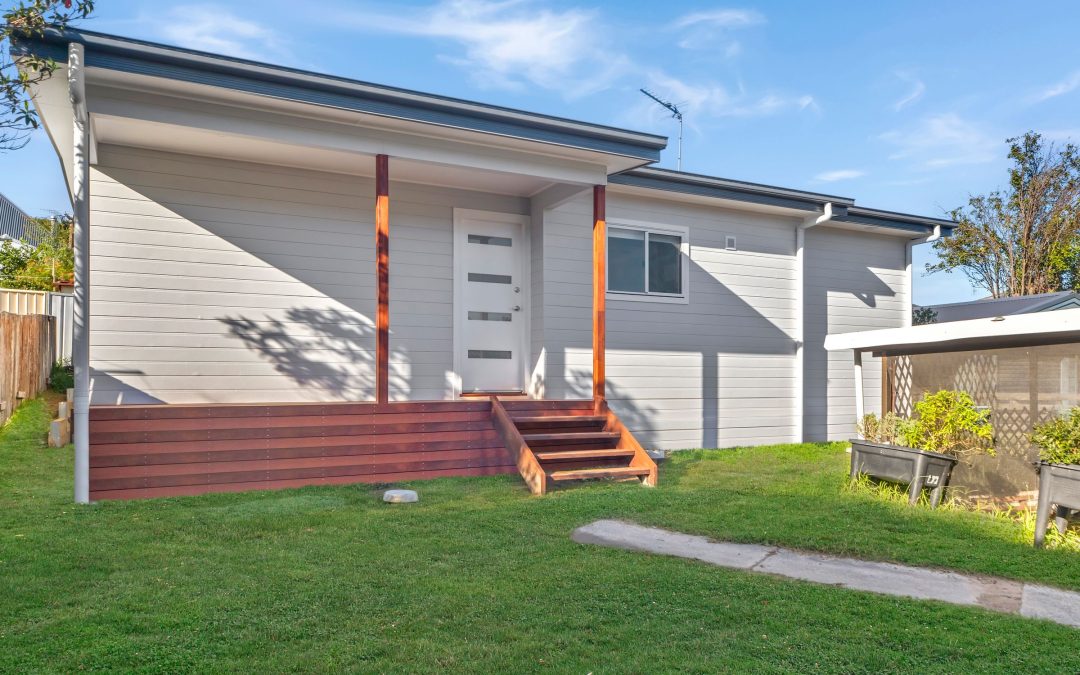
Cladding: James Hardie Primeline Chamfer Weatherboard in Taubmans Silver Blaze
Roof, Fascia & Gutter: Colorbond Basalt — a sleek, deep grey that complements the weatherboard perfectly
Windows: Aluminium frames in Pearl White Gloss for a crisp, clean finish
Front Door: Hume Bushfire Resistant BFR4 with translucent glass — finished in Merbau clear stain for warmth


Interior

Walls: Taubmans Silver Pearl throughout (except ensuites), with Taubmans Brilliant White in bathrooms for a fresh, bright feel
Flooring: 12mm Timber Laminate in Valley Oak throughout the living areas and hallways
Bedrooms: Crestview Carpet in Warm Stone — soft and inviting underfoot
Kitchen:

  • Benchtop: Smart Stone Essentials Range in Santorini (20mm)
  • Cabinetry: Laminex White 200 in a natural finish with nickel handles
  • Splashback: Gloss White tiles (300x600mm) laid horizontally
  • Appliances: Haier 600mm Electric Oven, Ceramic Cooktop, and Slide-Out Rangehood

Bathrooms

Floor Tiles: Bellingen Charcoal Matt (600x600mm) for a sophisticated look
Wall Tiles: Gloss White (300x600mm) laid vertically in a stackbond pattern
Fixtures: Pina Handshower and Basin Mixer in chrome
Vanity: Duraplex 600mm with a white china top and frameless mirrored shaving cabinet
Shower: Semi-frameless with a chrome frame and modern brass floor grate


Laundry

Tub: Everhard 30L Mini Laundry Unit
Tapware: Phoenix Ivy MKII Sink Mixer
Splashback: Gloss White tiles to match the kitchen


Lets Take a Look – 2-Bed 2-Bath Granny Flat Gallery

A Private Retreat with Modern Comfort

The Gemini’s clever layout and modern finishes make it the perfect retreat for homeowners seeking extra space, a rental opportunity, or multi-generational living. The separation of the two bedrooms enhances privacy, making it ideal for both short-term stays and long-term tenants.

The open-plan kitchen and living area create a welcoming hub for daily life, while the seamless connection to the outdoor patio provides an inviting spot for entertaining or relaxing.


Why the Gemini Is Perfect for Lake Macquarie Living

Building a 2-bed 2-bath granny flat in Lake Macquarie is a smart investment. The Gemini’s functional design and high-quality finishes provide long-term value, whether you’re creating space for family, a private guest retreat, or a rental opportunity.

At Aplus Granny Flats, we handle the entire process — from design and approvals to construction and final handover — ensuring a stress-free building experience.