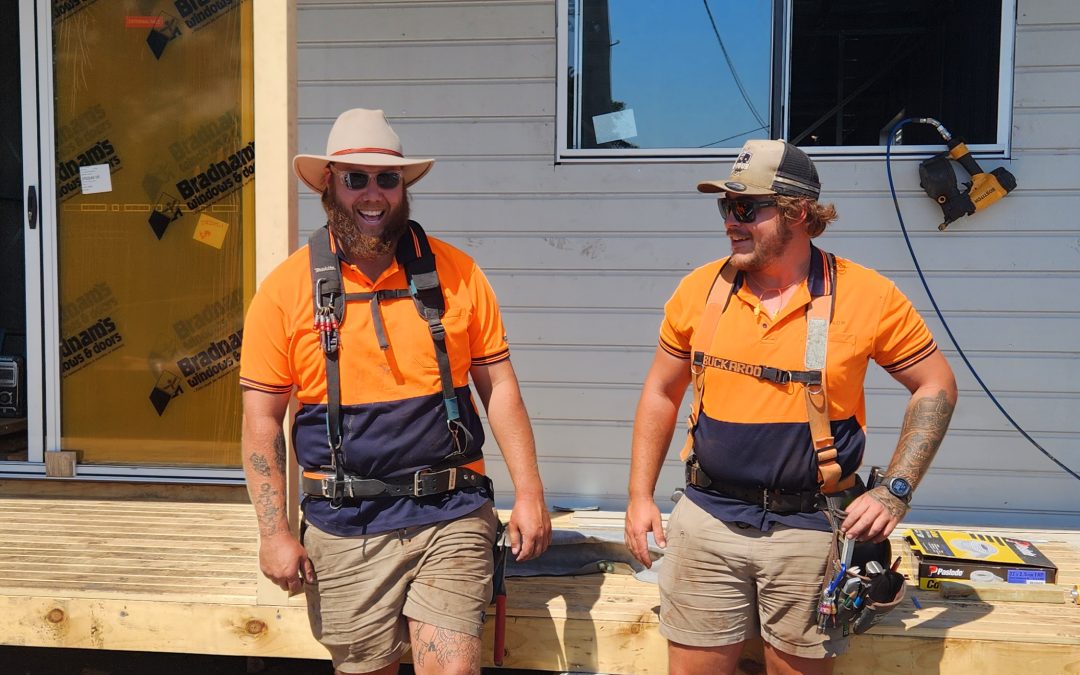
The importance of a site visit for your granny flat project

The importance of a site visit for your granny flat project

When embarking on a construction project, whether it’s a new build or an extension, a site visit by a licensed builder holds immense value. This crucial step allows the builder to assess various factors that can significantly impact the cost and delivery of your project. From analysing access for trades to identifying potential structural issues, a thorough site visit powers an accurate quote and risk assessment and ensures a smoother construction process. We explore the importance of a site visit and highlight the value the visit can offer in pinpointing issues that affect both the price and ease of your build.


Assessing Access for Trades and Storage of Materials

Your site visit evaluates the accessibility for tradespeople and determines the most efficient methods for transporting materials to your construction site. They take into account factors such as driveway access, nearby road conditions, and any potential obstacles that may hinder the movement of construction materials. Additionally, we’ll assess the availability of storage space to safely store frames, timber, and other necessary materials. By considering these aspects, builders can develop effective logistics plans that optimise the workflow, reduce delays and ensure the smooth operation of your project.


Identifying Existing Services

We carefully inspect the site to identify any existing services, such as plumbing, electrical, or gas lines, that may impede the construction process. We assess the impact of these services on the proposed build and will assess any necessary arrangements for relocation or integration. By addressing these issues upfront we can more accurately estimate the required resources and minimise the risk of unexpected expenses.


Evaluating space against regulations

And of course, a site visit is to work out whether your granny flat can be built via complying development certificate (CDC) or under development application (DA) in your local council area. We’ll look at boundaries, neighbouring properties, available space and other environmental and legislative considerations – and take the tie to understand how what possible matches, with building your granny flat home or investment.


Checklist for builder visit

Depending on your desired build (for example Granny Flat or Home Extension), your builders checklist may cover the following items and more)

  • Access for trades
  • Storage of materials
  • Existing Services
  • Truss or conventionally pitched roof – will dictate method of construction
  • Load bearing walls
  • Spot levels of property, assess rough calculation of earth to be removed
  • Structural requirements based on soil
  • Scaffold locations, if required
  • Assessment of temporary power
  • Assess access for heavy machinery, cranes, portaloos
  • Scope extent of any demolition
  • Talk to owners to assess information about living arrangements – small kids etc.

The value of a site visit cannot be overstated when it comes to accurately quoting a construction project. Through their expertise, a builder will thoroughly assess crucial aspects, ranging from access and storage of materials, to evaluating boundaries and identifying potential concerns. By pinpointing these issues early on, Aplus can provide a more accurate quote, develop effective construction plans, and mitigate potential risks and delays. Ultimately, a site visit sets a solid foundation for a successful and hassle-free construction process.


How can I ensure that my granny flat meets fire safety standards and is compliant with building codes in New South Wales?

# Ensuring Fire Safety Compliance in Granny Flats NSW

To meet fire safety standards and comply with building codes in New South Wales, follow these steps:

## Housing NSW Regulations

* The Housing NSW Act 2003 and the Building Code of Australia (BCA) must be followed.
* Consult the Housing NSW website or contact them for specific requirements.

## Fire Safety Requirements

1. **Fire-Resistant Materials**: Use fire-resistant materials, such as non-combustible cladding, in exterior walls and ceilings.
2. **Smoke Alarms**: Install smoke alarms on every level of the granny flat and inside each bedroom.
3. **Emergency Exits**: Ensure at least two escape routes are available, and doors leading to exits can be closed from both sides.
4. **Fire-Resistant Doors**: Install fire-resistant doors that meet BCA standards.

## Building Code of Australia (BCA) Requirements

* Consult the BCA website or contact a building control authority for specific requirements.
* Ensure compliance with BCA Volume One – Housing, which includes fire safety provisions.

## Additional Tips

1. **Consult Professionals**: Engage a builder or contractor experienced in granny flat construction to ensure compliance with regulations.
2. **Regular Maintenance**: Regularly inspect and maintain the granny flat’s fire safety systems to ensure they remain functional.

What are the benefits of building a granny flat on my property in New South Wales?

Benefits of Building a Granny Flat in New South Wales

Building a granny flat on your property in New South Wales can bring numerous benefits, including:

  • Increased Property Value: A well-designed granny flat can increase the value of your primary residence and improve its overall appeal to potential buyers.
  • Rental Income Potential: Granny flats are in high demand as affordable housing options, providing a steady stream of rental income.
  • Age-Related Support: Granny flats offer an ideal solution for elderly family members or relatives who require additional support and care without compromising their independence.
  • Tax Benefits: Homeowners can claim a portion of the granny flat’s construction costs on their tax return, reducing their taxable income.

Keyword Tags:
json
["granny flat", "New South Wales", "property value", "rental income", "age-related support"]

How do I determine if a granny flat is suitable for an elderly relative or family member in New South Wales?

Assessing Suitability of a Granny Flat

In New South Wales, consider factors such as accessibility and independence when evaluating a granny flat’s suitability for an elderly relative. Ensure the flat has:

  • A single entrance door with easy-to-use locks
  • Wide doorways (at least 725mm) and hallways to accommodate mobility aids
  • Level flooring throughout
  • Sufficient lighting and natural ventilation
  • Access to a fully equipped kitchen, bathroom, and toilet facilities
  • Adequate storage space for personal belongings

It’s also essential to consider the flat’s proximity to the main dwelling, ensuring easy access to medical care, social support, and other necessary services.

Additional Factors to Consider

  • Consult with a healthcare professional to assess your relative’s specific needs.
  • Assess the physical condition of the granny flat and ensure it meets relevant building codes and standards (e.g., AS 2041:2018).
  • Research local zoning laws and regulations regarding granny flats in New South Wales.

Keyword Tags:
json
["granny flat", "elderly care", "New South Wales", "accessibility", "independence"]

Can I rent out my granny flat in New South Wales, and if so, what tax implications should I be aware of?

Tax Implications for Renting a Granny Flat in NSW

In New South Wales, you can rent out your granny flat to tenants. To be eligible, the accommodation must meet certain standards and regulations.

  • The Australian Taxation Office (ATO) considers renting a granny flat as a taxable income source.
  • You’ll need to complete a tax return and report your rental income on your personal tax assessment.
  • You may also be required to register for Goods and Services Tax (GST) if you earn more than $75,000 per year from renting out the property.
  • The ATO allows a 50% private use exemption for primary residences, but this may not apply if the granny flat is used as a separate dwelling.
  • You’ll need to keep accurate records of rental income and expenses, including rent paid by tenants.

Additional Tax Considerations

  • You may be eligible for depreciation on assets used in the property, such as furniture or appliances.
  • The ATO has specific rules regarding capital gains tax (CGT) when selling a granny flat.

What are the tax implications of owning a granny flat in New South Wales?

Tax Implications of Owning a Granny Flat in NSW

In New South Wales, the tax implications of owning a granny flat depend on several factors, including the property’s value, use, and rental income.

  • The Australian Taxation Office (ATO) considers a granny flat as a separate entity from the main residence, subject to its own tax rules.
  • If the granny flat is used for residential purposes, it may be considered part of the main residence and not subject to capital gains tax (CGT).
  • However, if the granny flat is rented out, it will be considered a taxable asset, and rental income will need to be reported on the owner’s tax return.
  • The ATO requires a declaration for the “Granny Flat” to distinguish the primary residence from the granny flat.

Additional Tax Considerations

  • Depreciation on the granny flat may be claimed as a business expense if it is rented out, but only up to the original value of the property.
  • The cost of construction and maintenance can be claimed as capital allowances, with a depreciable amount of $1,100 per year for residential buildings.
  • Stamp duty and land transfer costs will apply when purchasing the granny flat.

Keyword Tags:
json
["NSW", "Granny Flat", "Tax Implications", "Rental Income", "Capital Gains Tax"]